
Phew. What an absurdly interesting year. I genuinely think I’m getting dangerously close to the threshold of “losing my mind.” From graduating at the beginning of the year, to a few unfortunate incidents around March and April that, luckily, are resolved already, to building new friendships and relationships around the middle of the year, and now, yeah, another fucking existential crisis at this point in time.
I thought I had prepared myself pretty well for this. Like, really well. But when you actually have to confront it honestly, the feeling is still incredibly strange, almost like living inside some science-fiction movie.
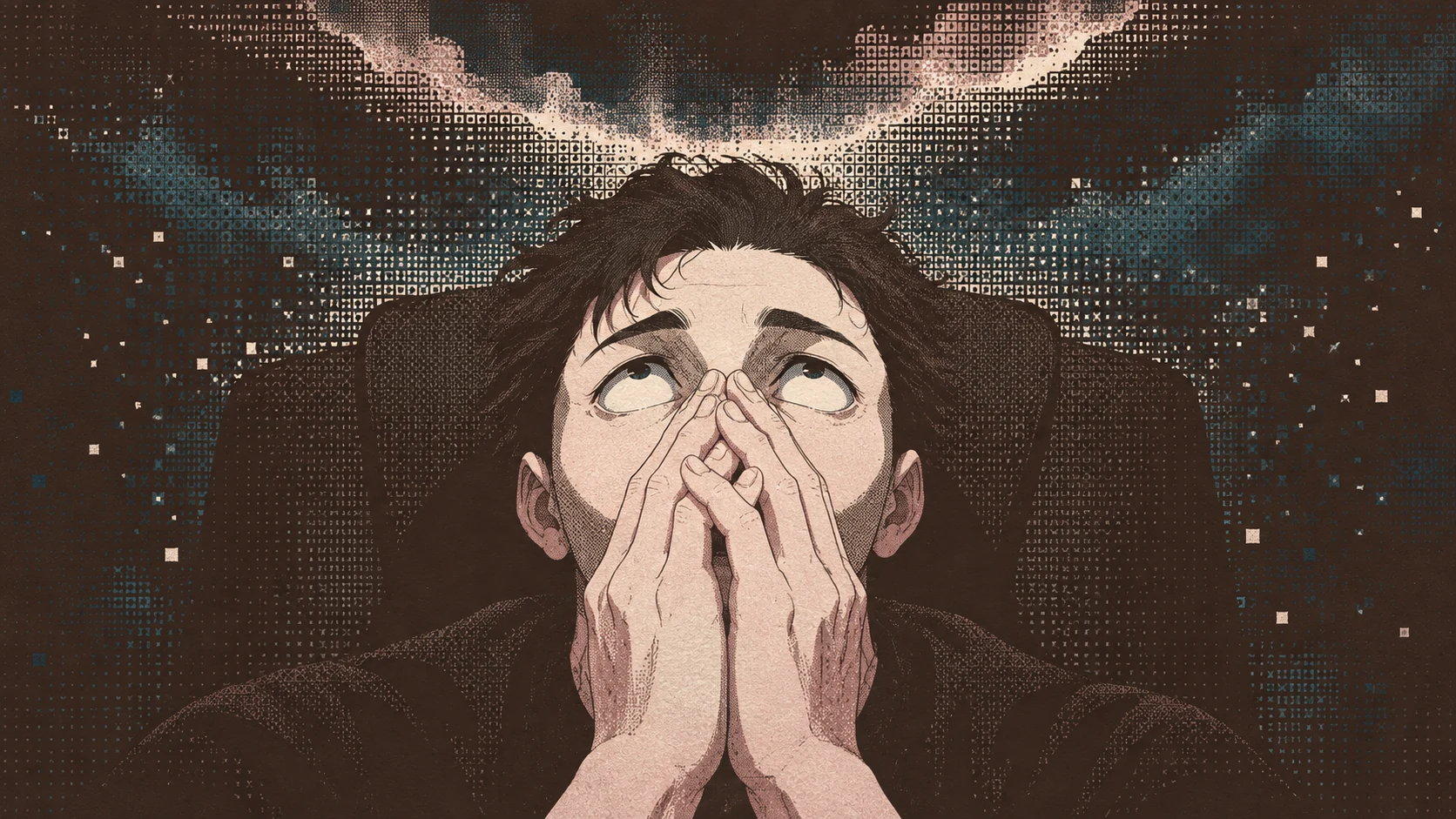
Somewhere between surrender and reaching back.
I had already written about a future that felt prewritten through Gattaca, ta và định mệnh. This feels different: less like fate than acceleration. Sometimes I genuinely wonder: what if I’m just an NPC after all?
So what’s left?
One by one, the boundaries are disappearing. All these capabilities, all these little “feats” that humans once thought were uniquely ours, keep getting knocked down.
One of the main reasons I chose to study AI, back when it was still a relatively new field in Vietnam, was basically because of this line from Demis Hassabis:
Solve intelligence, and then use that to solve everything else.
That statement was so compelling to me that it genuinely convinced me to enter this field in the first place. But now I find myself asking the opposite question.
If we actually solve intelligence... what's left for me to solve?
Safety? Robotics? Sure. But what exactly stops the biggest players in the field from throwing ridiculous amounts of compute at those problems too and gradually automating the whole research pipeline? Do we even have a chance? Is any of this real, or are we somehow participating in the biggest fucking scam in human history?
Whatever. At this point, I think there’s a non-trivial chance that we’re already crossing, or have begun crossing, something resembling the singularity. Yeah, maybe I’m just another crazy guy thinking about this at 3 a.m.
I read the spoilers early
And the funny part is: none of this is exactly new information to me. I basically read the spoilers one or two years early.
I spent a frankly stupid amount of time going down the Dwarkesh Patel rabbit hole: interviews with researchers, lab leaders, forecasters, people arguing about scaling, AGI timelines, automated AI research, alignment, economics, and what happens when cognitive labor itself stops being scarce. More books, more essays, more papers, more late-night reading. Gödel, Escher, Bach was somewhere in that intellectual mess too, circling the whole question of minds, symbols, self-reference, and whether there is actually some magical ingredient separating “real” intelligence from mechanism.
Then came things like AI 2027: an explicit attempt to make the vague “what if AI progress keeps accelerating?” question concrete enough that you could actually imagine living through it. Hell, I was already reading AI 2027 while trying to figure out where to pivot next :))
The reverse case
But I also didn’t want to become one of those guys who reads three LessWrong posts and suddenly thinks he has decoded the destiny of civilization. So I deliberately read the reverse case too.
People like Carl Brown from Internet of Bugs were useful precisely because the worldview is almost the mirror image: stop extrapolating from demos, stop treating every benchmark jump as the arrival of God, look at what these systems actually do inside real software projects, look at the failure modes, look at the incentives behind the hype. His criticism of systems like Devin, for example, was not “AI can never work”; it was much more mundane and therefore much more annoying: look carefully at what was actually demonstrated before believing the story being sold to you.
And I liked that. For almost every “scaling will eat the world” argument, I tried to find the “maybe this is bullshit” argument; for every two-year AGI timeline, I wanted to hear the case for ten or twenty; for every claim that software engineering was about to disappear, I wanted to hear from someone who had actually spent decades maintaining software explain why a benchmark and a production system are not the same thing.
Even Dwarkesh himself has moved back and forth on parts of this. He has written both about how scaling could plausibly automate huge amounts of cognitive labor and, later, about bottlenecks like continual learning that could make very short AGI timelines wrong.
Knowing wasn’t preparation
So this current feeling isn’t really the result of discovering the AI-doomer worldview yesterday. That’s almost what bothers me.
I had already tried to steelman both sides. I had already mentally rehearsed this future. I had already spent one or two years reading people arguing that this would happen, people arguing that it absolutely would not happen, and people arguing that the entire framing was confused.
And somehow, when the abstract arguments started turning into things I could actually see around me, it still felt completely different. Because after all that reading, I have become pretty convinced of one thing:
Human intelligence is probably not that metaphysically special.
What I still cannot comprehend is how quickly everything is happening. Because when I look backward, I feel like I picked almost every major choice near-optimally.
I pivoted into AI at university when the field was still quite new in Vietnam. I was literally in the first cohort. I studied my ass off and somehow ended up becoming valedictorian. I realized relatively early that robotics and safety were probably going to matter enormously, and I tried to find every possible way to move in that direction.
And yet now I feel like I’m no longer controlling any of this. More precisely, I don’t think I can even comprehend the situation anymore. I don’t know what to say. I’m genuinely running out of words.
How am I supposed to compete with AI, or with humans using AI to generate some unbelievable amount of fucking slop at a scale I cannot match? I don’t know.
Maybe I’m not proactive enough. Maybe I never really learned how to throw myself completely into one thing. Maybe that’s the actual problem.
But regardless, the storm is approaching.
And I'm confused.
When prestige changes direction
Maybe those of us who were labelled “gifted at STEM”, and quietly taught that this aptitude was both prestigious and future-proof, should prepare for a stranger possibility: not that our skills become useless, but that they stop being scarce.
There is precedent. In imperial Vietnam, the Confucian classics, including the Four Books and Five Classics, were not merely old literature. They formed the curriculum through which scholars entered the examination system and, for the successful few, the mandarinate. Classical learning could be converted into office, authority, and social status. Industrialization later changed the kinds of knowledge societies could convert into power. It did not replace scholars with engineers overnight. It gradually rewarded practical knowledge, skilled craft, science, and engineering, then built new professional institutions around them.
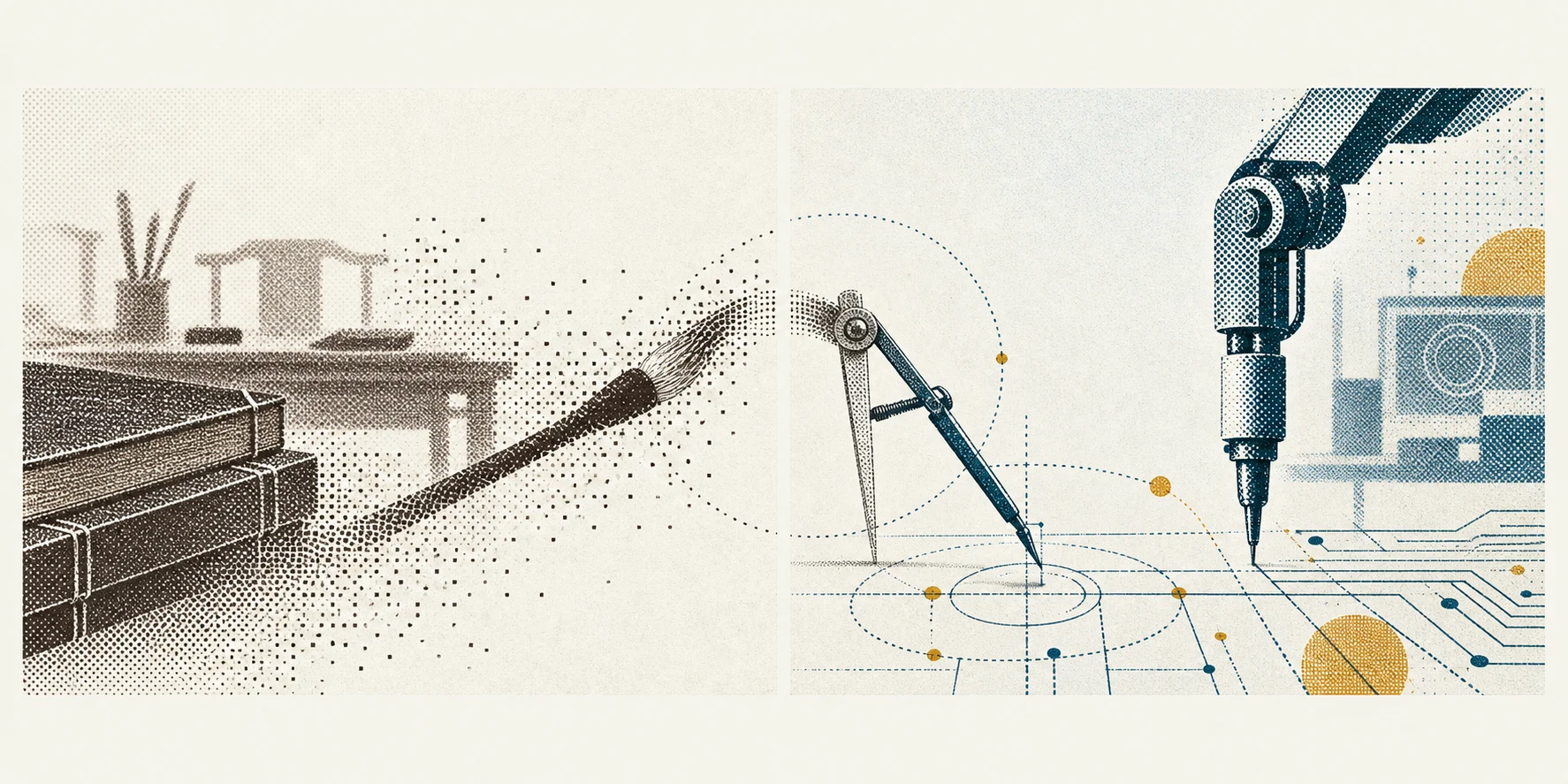
Prestige follows scarcity, until scarcity moves.
AI may be beginning another revaluation. Software and other highly digitized cognitive work already sit among the occupations most exposed to generative AI, although the evidence so far points more toward jobs being transformed than simply erased. At the same time, judgment, coordination, management, and social skills remain heavily demanded in AI-exposed work.
Maybe this is not the death of STEM. Maybe it is the end of STEM as a sufficient credential: when execution becomes cheap, the scarce advantage may move toward deciding what should be built, for whom, and why.
What if being “the STEM kid” becomes something like being the brilliant classical scholar standing just before the rules of prestige changed?
The boundary keeps moving
Now we have OpenAI publicly claiming a solution to the Navier–Stokes existence and smoothness problem, one of the Millennium Prize Problems, using an internal system involving roughly 10,000 agents.
Maybe the 166-page proof survives scrutiny. Maybe it doesn’t. There is already a serious controversy around attribution, unpublished work, training data, and how independently the system arrived at the result. And until the mathematics goes through the ordinary process of expert scrutiny, “Millennium Prize solved” should remain a claim, not a settled historical fact.
But that’s almost beside the point for the feeling I’m trying to describe. A few years ago, “an AI system attacks a Millennium Prize Problem with thousands of coordinated agents and produces a proof that serious mathematicians now have to inspect” would itself have sounded like science fiction.
Now the argument is about whether the proof is valid, whether the result was genuinely independent, who deserves credit, and what data the model might have seen. The boundary moved before we even finished arguing about the previous boundary.
The moving goalpost
And this feels like a recurring pattern in AI. Every time something happens, we immediately retreat into another argument about why it doesn’t really count:
“It doesn't understand.”
“It's just pattern matching.”
“It needed human scaffolding.”
“It used too much compute.”
“It couldn't have discovered this autonomously.”
Maybe all of those criticisms are legitimate. Seriously. Maybe some of them are extremely important. The Internet of Bugs part of my brain is still sitting there asking whether the demo matches the headline.
But sometimes the capability remains anyway. The result remains. And the boundary moves again.
Around me, I can already see people surrendering parts of themselves to this process. A surprising number of people openly admit that they can barely code anymore without AI. And I sometimes wonder whether I’m slowly ending up in the same situation, or whether I’m already there.
The world has changed.
That much seems obvious. But changed toward what? That's the part I can't see.
What remains human
The one thing I still feel strangely confident about is Ecclesiastes 1:9:
The thing that hath been, it is that which shall be; and that which is done is that which shall be done: and there is no new thing under the sun.
Technology changes. Intelligence may cease to be scarce. Entire professions may disappear. The economic structure around human cognition may be rewritten. And yet maybe the human part remains remarkably boring. We will still love people. We will still envy people. We will still compete, cooperate, betray, create tribes, chase status, make art, start wars, fall in love, get bored, search for meaning, convince ourselves that this particular moment is the most important moment in history. We will still be chaotic creatures. The only question is: for how many more years does the surrounding world remain recognizable? I genuinely feel like I’m in the state people online jokingly call “AI psychosis.” Not in the sense that I’ve completely lost touch with reality, almost the opposite. The problem is that reality itself currently feels difficult to digest, and that’s probably what makes it so surreal. I tried to prepare for this. I read the books. I studied the technical side. I followed the research. I listened to hours and hours of people arguing both sides. I thought about philosophy. I did art. I deliberately exposed myself to ideas that were supposed to make this future less shocking when it eventually arrived. And somehow it still wasn’t enough.
Because intellectually accepting that the future is uncertain is one thing. Reading a forecast about it at 3 a.m. is one thing. Debating whether scaling works is one thing. Actually wrestling with uncertainty when some approximation of that future starts arriving in front of you is something else entirely.
Ten years from now
Open this ten years from now
- Did intelligence actually stop being scarce?
- Did the work you feared losing disappear, or did it change?
- What remained yours?
Maybe none of this ends up being as dramatic as it currently feels. Maybe the skeptics are more right than the accelerationists. Maybe the next wall is much harder than the previous ones. Maybe ten years from now I’ll reread this and laugh at how ridiculously apocalyptic I sounded. Honestly, I hope so. But right now? Everything feels profoundly, deeply surreal.
The storm is approaching.
I just have no fucking idea what kind of storm it is.
References
- Demis Hassabis, “Step one: Solve intelligence. Step two: Use it to solve everything else”, Stanford Graduate School of Business, 2026.
- Douglas R. Hofstadter, Gödel, Escher, Bach: An Eternal Golden Braid, Basic Books.
- Daniel Kokotajlo et al., AI 2027, 2025.
- Dwarkesh Patel, “Will scaling work?”, 2023; and “Why I don’t think AGI is right around the corner”, 2025.
- Carl Brown, Internet of Bugs, critique of Devin’s Upwork demo, 2024; see also The Register’s summary, 2025.
- UNESCO Memory of the World, “Stone Stele Records of Royal Examinations of the Lê and Mạc Dynasties”; and Alexander Woodside, “Books without Borders: Phạm Thận Duật and the Culture of Knowledge in Mid-Nineteenth-Century Vietnam”, The Journal of Asian Studies, 2006.
- Joel Mokyr, “Bottom-up or top-down? The origins of the Industrial Revolution”, Journal of Institutional Economics, 2018; and the history of the Institution of Civil Engineers.
- International Labour Organization and NASK, “Generative AI and Jobs: A Refined Global Index of Occupational Exposure”, 2025; and OECD, “Artificial intelligence and the changing demand for skills in the labour market”, 2024.
- OpenAI, “On the Navier–Stokes Millennium Prize Problem”, proof paper, and Lean formalization, September 2026.
- Will Knight and Maxwell Zeff, “OpenAI Just Claimed a Huge Math Discovery. Some Academics Are Crying Foul”, WIRED, September 2026.
- Navier–Stokes Equation, Clay Mathematics Institute.
- Ecclesiastes 1:9, King James Version.
Main idea & story by escaperr94Polished by GPT-5.6 Sol